
HABITS
Mid-month is when "I'll look later" starts winning
Rent, internet and an instalment often get cleared near the start of the month. Then mid-month arrives, the list feels empty, and "I'll look later" sounds free. End-of-month dues still sit there. The quiet is the trap.
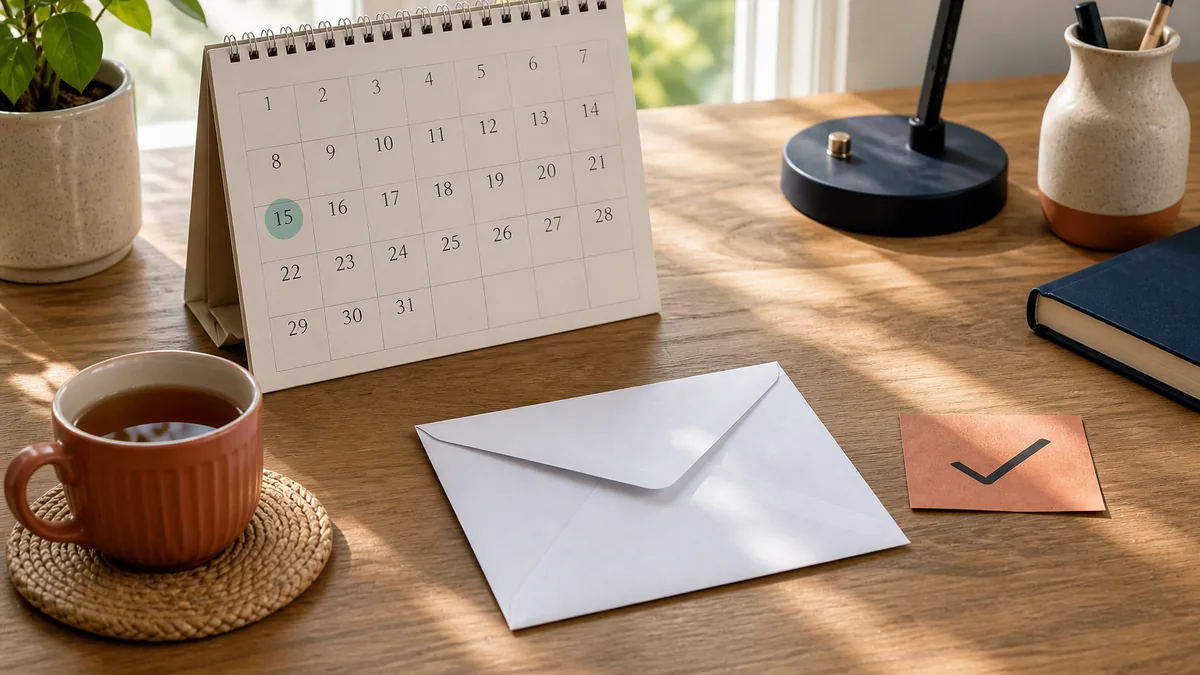
Early-month chores create a false sense of finish. Payday rent, utilities and the first wave of transfers get attention because the calendar pushes them. After that, the middle of the month has almost no cue. Nothing is "due today," so the unpaid and upcoming entries fade into background noise.
The problem is not intelligence. It is a missing trigger. Mid-month quiet is different from a Friday-before-weekend cue and different from "I'll pay tomorrow." Here the calendar simply goes blank, so later feels cost-free until several dues bunch near month-end.
Why the crush arrives so late
There is rarely one dramatic skip. It is a chain of tiny gaps: a bill still in email, a due date never written down, a payment route that needs a minute, and a mid-month day that feels empty enough to ignore. No single gap feels urgent. Together they remove the prompt to look.
You do not need a second budgeting system for this. You need one reliable moment that brings unpaid and upcoming bills into the same view before the crush.
That mid-month bill payment habit is only the cue. For the open bills that still need a reminder before they are due, use the before-due reminder guide. It covers recording due dates and setting ordinary reminders without turning this short note into a full how-to.
When you are ready to keep those entries on the phone, Smart Bill Reminder can store a bill with a due date and schedule its usual reminders when notifications are enabled. It does not invent a mid-month mode, pay the bill, transfer money, move a deadline, or confirm that an issuer has received a payment. The reminder's job is to make you look; the issuer still owns the rules.